


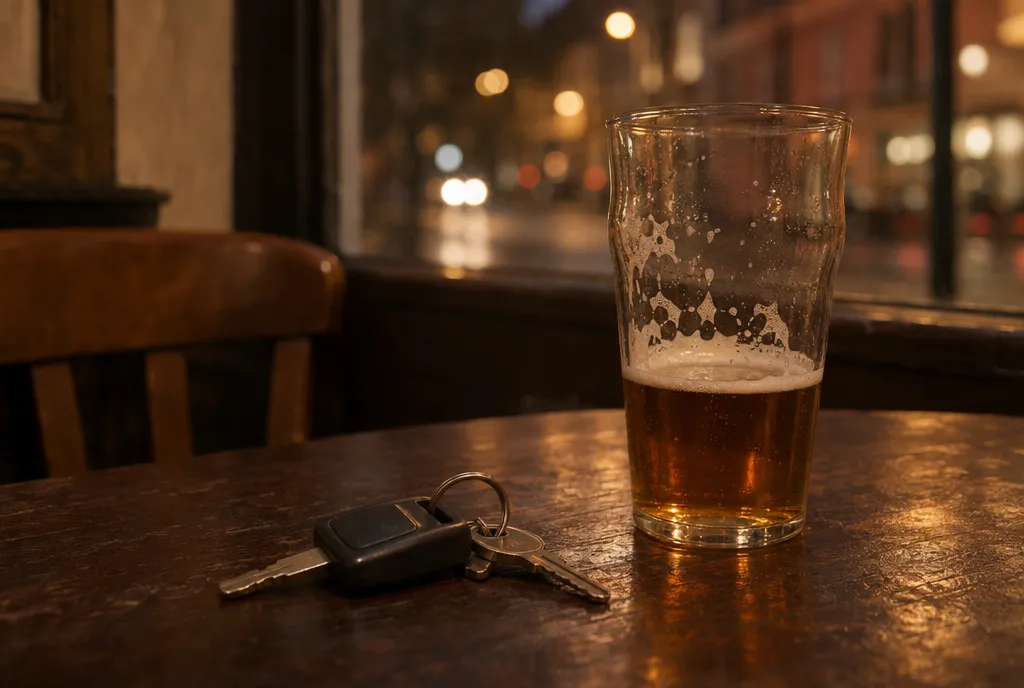
If you are caught drink driving in Scotland, you will usually be arrested, asked to give evidential breath samples at a police station and reported to the procurator fiscal. If convicted, you face a minimum 12-month driving ban, a fine of up to £5,000 and up to six months in prison. The conviction stays on your driving licence for 11 years.
Scotland has a lower drink drive limit than England and Wales, so it is easier to be over the limit here, particularly the morning after drinking. This guide explains the limits, what happens step by step, the penalties and the options available.
The drink drive limit in Scotland
Since December 2014, the limits in Scotland have been:
- 22 micrograms of alcohol in 100 millilitres of breath
- 50 milligrams of alcohol in 100 millilitres of blood
- 67 milligrams of alcohol in 100 millilitres of urine
There is no reliable way to know how much you can drink and stay under the limit. It depends on your weight, sex, metabolism, what you have eaten and the strength of the drink. The Scottish Government's advice is simple: the only safe approach is none. Alcohol can take 24 hours or more to leave your body, so you can still be over the limit the morning after a night out.
What happens step by step
1. The roadside test
Police can ask you to take a preliminary breath test if they suspect you have been drinking, if you have committed a moving traffic offence or if you have been involved in an accident. Refusing without a reasonable excuse is an offence in itself.
2. Arrest and the evidential test
If the roadside test is positive, you will usually be arrested and taken to a police station. There you will be asked to provide two specimens of breath on an approved machine. The lower reading is used. In some circumstances, for example if the machine is unavailable or there is a medical reason, police may require a blood or urine sample instead.
3. Charge and release
If the evidential reading is over the limit, you will be charged. You may be released on an undertaking to appear at court on a set date, or released while a report is sent to the procurator fiscal, who decides whether to prosecute. Most drink driving cases in Glasgow are heard in the Justice of the Peace Court or Glasgow Sheriff Court.
4. Court
At the first hearing you will be asked to plead guilty or not guilty. Many people plead guilty, but you should take legal advice before doing so. There may be a defence, such as problems with the procedure or the equipment, or there may be "special reasons" that allow the court not to impose a ban.
The penalties
For driving or attempting to drive over the limit, the court must impose:
- A driving ban of at least 12 months. The higher the reading, the longer the ban is likely to be.
- A minimum three-year ban if you have another drink or drug driving conviction within the previous ten years.
The court can also impose:
- A fine of up to £5,000.
- Up to six months in prison, more likely where the reading is very high, there was an accident or there are previous convictions.
- A community payback order instead of prison in some cases.
- Forfeiture of the vehicle you were driving. Scottish courts can order this, particularly for repeat or high-reading offenders.
The conviction remains on your driving licence for 11 years, and it is a criminal conviction that may need to be disclosed to employers in some circumstances. Insurance premiums are usually much higher afterwards.
Important: being "in charge" of a vehicle while over the limit, for example sitting in a parked car with the keys, is a separate offence. It carries 10 penalty points, a possible ban and up to three months in prison, even if you never intended to drive.
Failing to provide a specimen
If you fail or refuse to give a breath, blood or urine specimen without a reasonable excuse, the penalties are similar to drink driving, including an obligatory ban. Courts treat refusal seriously, and the ban is often longer than for a low reading.
Can you reduce the ban?
The drink drive rehabilitation course
If you are banned for 12 months or more, the court may offer you a place on an approved drink drive rehabilitation course. If you complete it within the required time, your ban is usually reduced by a quarter. You pay for the course yourself, and it can cost up to £250.
Special reasons
Special reasons relate to the circumstances of the offence, not your personal situation. Examples include a drink being spiked without your knowledge, driving a very short distance with no danger to others, or a genuine emergency. If the court accepts special reasons, it can decide not to impose the minimum ban. These arguments need evidence and are not often successful, so take advice.
Exceptional hardship, the argument used to avoid a 12-point totting-up ban, does not apply to obligatory drink driving bans. Our guide on exceptional hardship in Scotland explains the difference.
Getting your licence back
For most drivers, the licence is returned at the end of the ban after an application to the DVLA. Drivers with very high readings, two drink driving offences within ten years, or a conviction for failing to provide a specimen may fall into the DVLA's High Risk Offender scheme. They must pass a medical assessment showing they do not have an alcohol problem before the licence is returned.
Do you need a solicitor?
Drink driving cases are prosecuted as criminal offences, and the outcome can affect your job, your income and your record for years. A solicitor can check the police procedure, advise on any defence or special reasons, and present mitigation that may reduce the length of the ban or keep you out of custody. Legal aid may be available in some cases. Compare Glasgow's leading road traffic lawyers, or see our ranking of criminal defence lawyers in Glasgow for more serious cases.
Frequently asked questions
What is the drink drive limit in Scotland?
22 micrograms of alcohol in 100 millilitres of breath, 50 milligrams in 100 millilitres of blood, or 67 milligrams in 100 millilitres of urine. This is lower than the limit in England and Wales.
What is the minimum ban for drink driving in Scotland?
Twelve months for a first offence, and at least three years if you have another drink or drug driving conviction within the previous ten years.
Will I go to prison for drink driving?
Possibly. The maximum sentence is six months in prison, but most first offenders with lower readings receive a fine and a ban. High readings, accidents and previous convictions increase the risk of custody.
How long does drink driving stay on my licence?
A drink driving conviction stays on your driving licence for 11 years.
Can I reduce my drink driving ban?
If you are banned for 12 months or more, the court may offer a drink drive rehabilitation course. Completing it usually reduces the ban by a quarter.
Can I be over the limit the morning after?
Yes. Alcohol can take 24 hours or more to leave your body, so you can still be over Scotland's lower limit the next morning.
Conclusion
So, what happens if you are caught drink driving in Scotland? You will usually be arrested, tested at a police station and prosecuted. A conviction brings a minimum 12-month ban, a possible fine of up to £5,000 or imprisonment, and an entry on your licence for 11 years. Scotland's lower limit means even a small amount of alcohol can put you over.
If you have been charged, take advice before your first court date. Compare the best road traffic lawyers in Glasgow in our independent directory.