


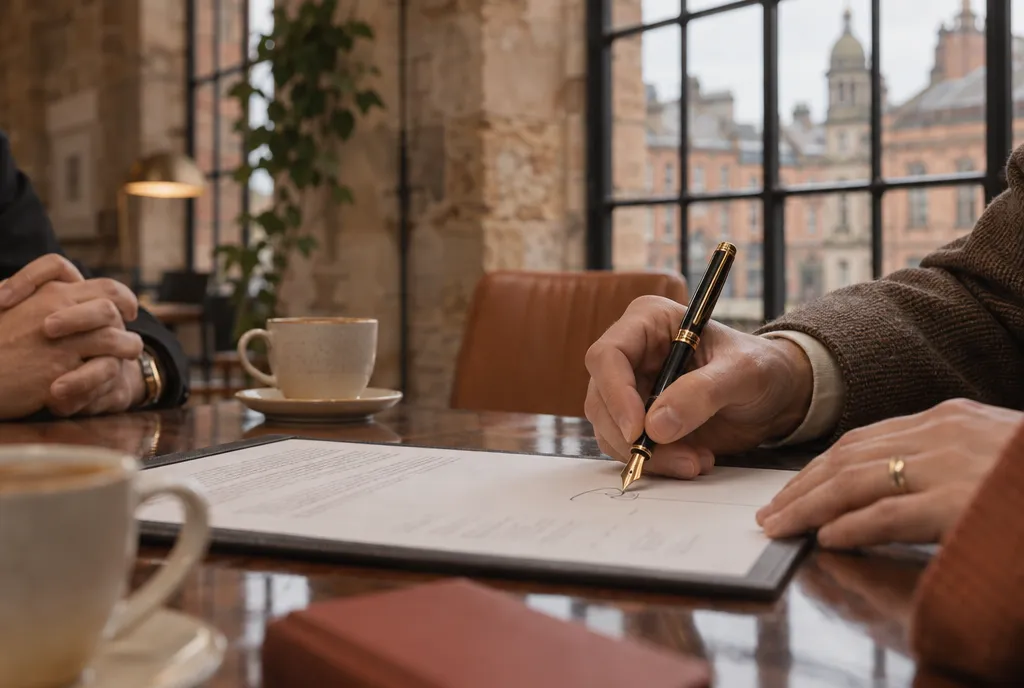
If your company has more than one shareholder, a shareholders' agreement is strongly advisable. It is a private contract between the shareholders that sets out how the company will be run, how decisions are made, what happens if someone wants to leave or dies, and how disputes are resolved. Without one, you rely on the company's articles of association and the Companies Act 2006, which may not reflect what you agreed.
Shareholders' agreement or articles of association?
Every company has articles of association, its constitution, filed publicly at Companies House. Many small companies use the standard "model articles". A shareholders' agreement sits alongside the articles:
- Privacy: the articles are public, while a shareholders' agreement is private.
- Changing the terms: articles can usually be changed by a special resolution of 75% of the votes, while a shareholders' agreement normally needs everyone who signed it to agree.
- Personal obligations: an agreement can impose obligations on shareholders personally, such as non-compete promises.
The two documents should be drafted together so they are consistent.
Key clauses to include
Decision-making and reserved matters
A list of important decisions that need the approval of all shareholders, or a set majority, such as issuing new shares, taking on major borrowing, selling the business or changing what it does. This protects minority shareholders.
Share transfers and pre-emption
Rules on who shares can be sold to, usually requiring them to be offered to existing shareholders first, so an outsider cannot become an owner without agreement.
Leavers
"Good leaver" and "bad leaver" clauses set out what happens to a shareholder's shares if they stop working in the business, and at what price they must sell them. This is one of the most important clauses for owner-managed companies.
Drag-along and tag-along rights
Drag-along rights allow a majority who agree to sell the company to require the minority to sell on the same terms. Tag-along rights protect the minority by letting them join a sale on the same terms.
Deadlock
In a 50:50 company, a disagreement can freeze the business. A deadlock clause sets out what happens: mediation, an expert decision, a casting vote, or a buy-sell mechanism under which one shareholder buys the other out.
Death and incapacity
What happens to a shareholder's shares if they die or lose capacity, often linked to shareholder protection insurance so the others can afford to buy the shares.
Other common terms
- Dividend policy.
- Restrictive covenants, such as not competing or poaching staff or customers after leaving.
- Confidentiality.
- Funding obligations.
- Dispute resolution.
Tip: the best time to agree a shareholders' agreement is at the start, while everyone is getting on. Negotiating one after a dispute has begun is much harder.
What happens without one?
Without a shareholders' agreement, the default rules apply. A majority shareholder can usually control the board and most decisions. A minority shareholder may have limited protection, and their main remedy may be an unfair prejudice petition to the court under section 994 of the Companies Act 2006, which is expensive and uncertain. Departing shareholders can keep their shares, and there may be no agreed way to value or buy them out.
Is a shareholders' agreement different in Scotland?
Company law is largely the same across the UK, but the agreement should be governed by Scots law if the company and its shareholders are based in Scotland. Points such as signing formalities, the courts that will hear disputes and how the agreement interacts with Scottish succession law should be considered by a Scottish solicitor.
Getting it drafted
Templates rarely fit a real business. A corporate solicitor will tailor the agreement and the articles to your ownership structure and plans. Compare the leading commercial and business solicitors in Glasgow in our independent ranking. If your business is acquiring or leasing premises, see our guide to LBTT on commercial property and leases.
Frequently asked questions
Is a shareholders' agreement a legal requirement?
No, but it is strongly advisable for any company with more than one shareholder.
What is the difference between a shareholders' agreement and articles of association?
Articles are the company's public constitution and can usually be changed by a 75% vote. A shareholders' agreement is private and normally needs every signatory to agree to changes.
What is a good leaver and bad leaver clause?
It sets out what happens to a shareholder's shares when they stop working in the business, and the price they receive, depending on the circumstances of leaving.
What happens in a 50:50 deadlock?
Without a deadlock clause, the business can be frozen. An agreement can provide mediation, an expert decision or a buy-out mechanism.
What protection does a minority shareholder have without an agreement?
Limited protection. The main remedy may be an unfair prejudice petition under section 994 of the Companies Act 2006, which is costly and uncertain.
When should we sign a shareholders' agreement?
Ideally when the company is formed or a new shareholder joins, before any disagreements arise.
Conclusion
So, do you need a shareholders' agreement for your Scottish company? If there is more than one shareholder, it is one of the most valuable documents you can have. It protects everyone, sets clear rules for decisions and exits, and avoids costly disputes.
Compare the leading commercial and business solicitors in Glasgow to get yours drafted.